 12
See the idea before anyone plans it
Comment on any element of the agent's HTML sketch. The agent replies in that comment's thread, and the page re-renders with the change.
Sketches are desktop only.
 SimpleEdit
Your agents build and check each other's work, then bring their questions to you, on the code itself. Schedules and triggers put them back to work: a weekly bug hunt, a failed CI run.
Install on macOS with HomebrewWindows, Linux →
brew trust pago/simpleedit
brew install --cask pago/simpleedit/simpleedit
Free, no telemetry. macOS, Windows and Linux, with a phone companion.
Needs Claude Code, Codex or OpenCode installed.
export function lateFee(inv: Invoice, gross: Money, asOf: Date) { const overdue = daysOverdue(inv, asOf) if (overdue <= policy.graceDays) return money(0, gross.currency) Author: Should interest count from the due date, or only after the grace period? I wasn't sure which the policy means.
graceDays for? 12 Comment on any element of the agent's HTML sketch. The agent replies in that comment's thread, and the page re-renders with the change.
Sketches are desktop only.
 12
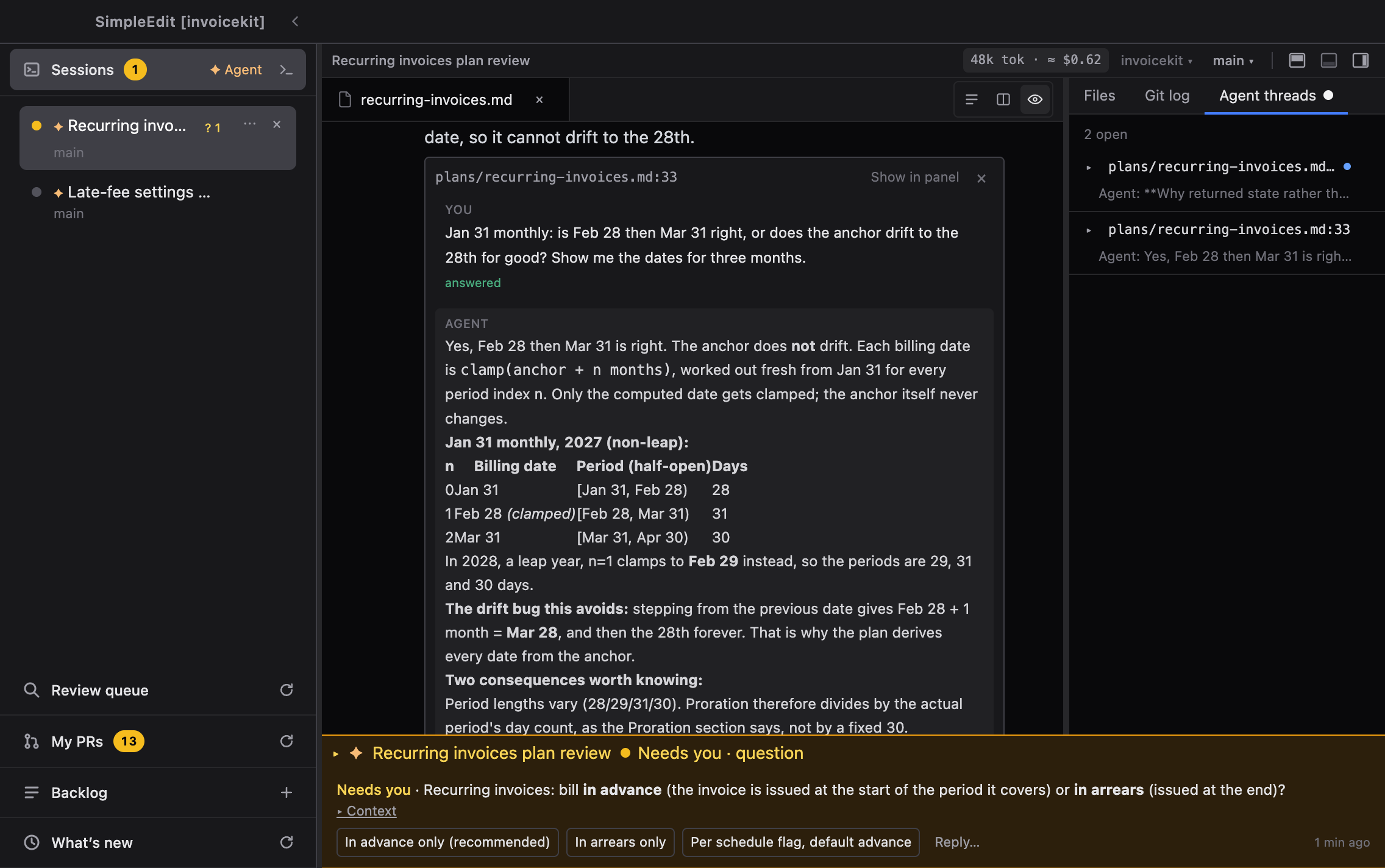
Discuss the plan in threads on its paragraphs. When the agent needs a decision, you pick one of its options.
Answers reach the agent when it is idle, never mid-turn.
 123
A lead agent turns the plan into a task graph and writes no code. Workers run the tasks in parallel on Claude, Codex or OpenCode, and an independent reviewer checks every result.
At a review gate the run stops for you. Nothing lands until you accept it.
A whole project scales up to a team: a director coordinates one lead for each lane of the plan, and the lanes run side by side.
 12
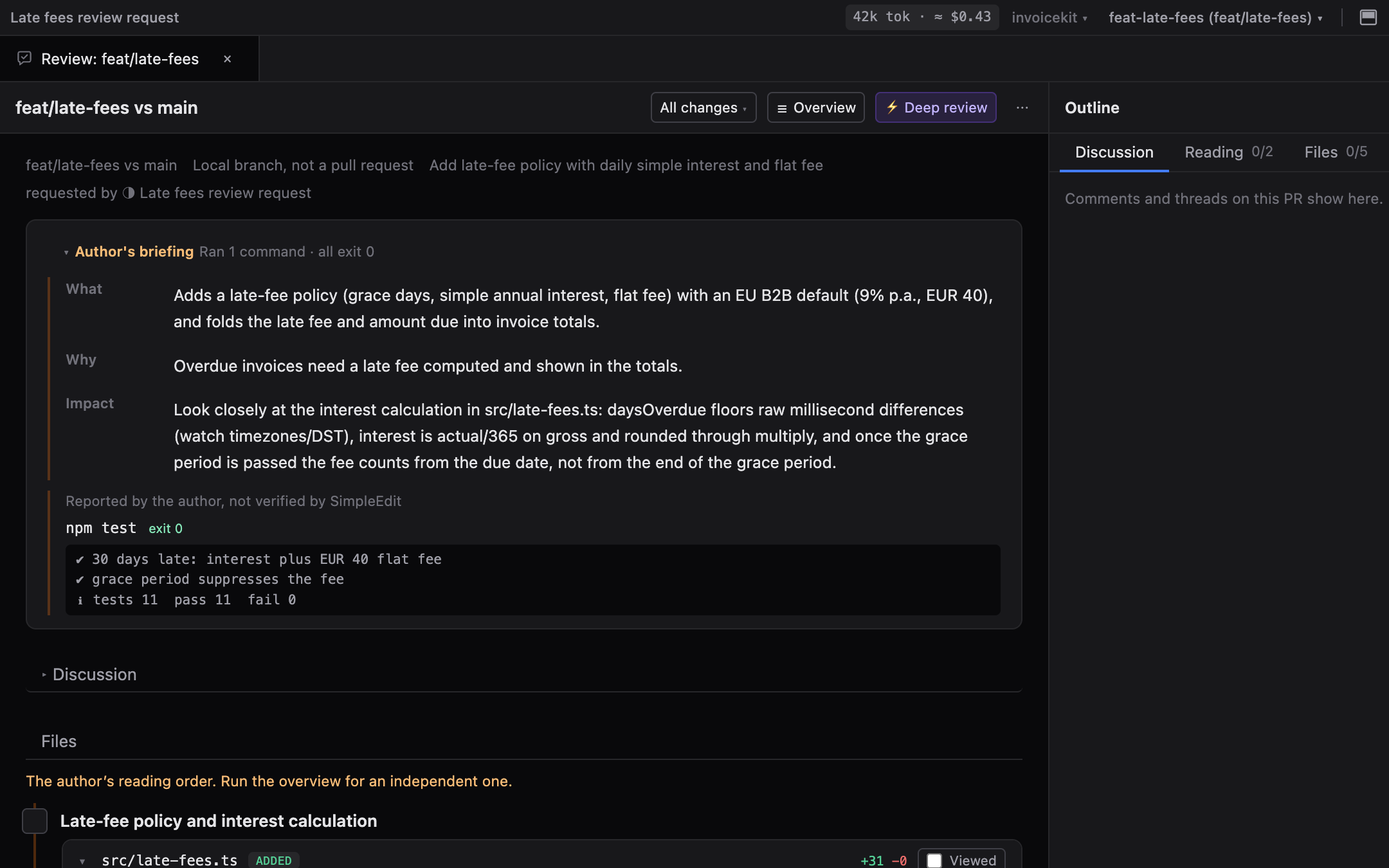
The Review Room opens on the Author's briefing: what changed, why, what it affects and where to start reading. The checks the Author ran come with their output, marked as reported by the Author, not verified.
What the Author wasn't sure about waits for you as threads on the lines.
 12
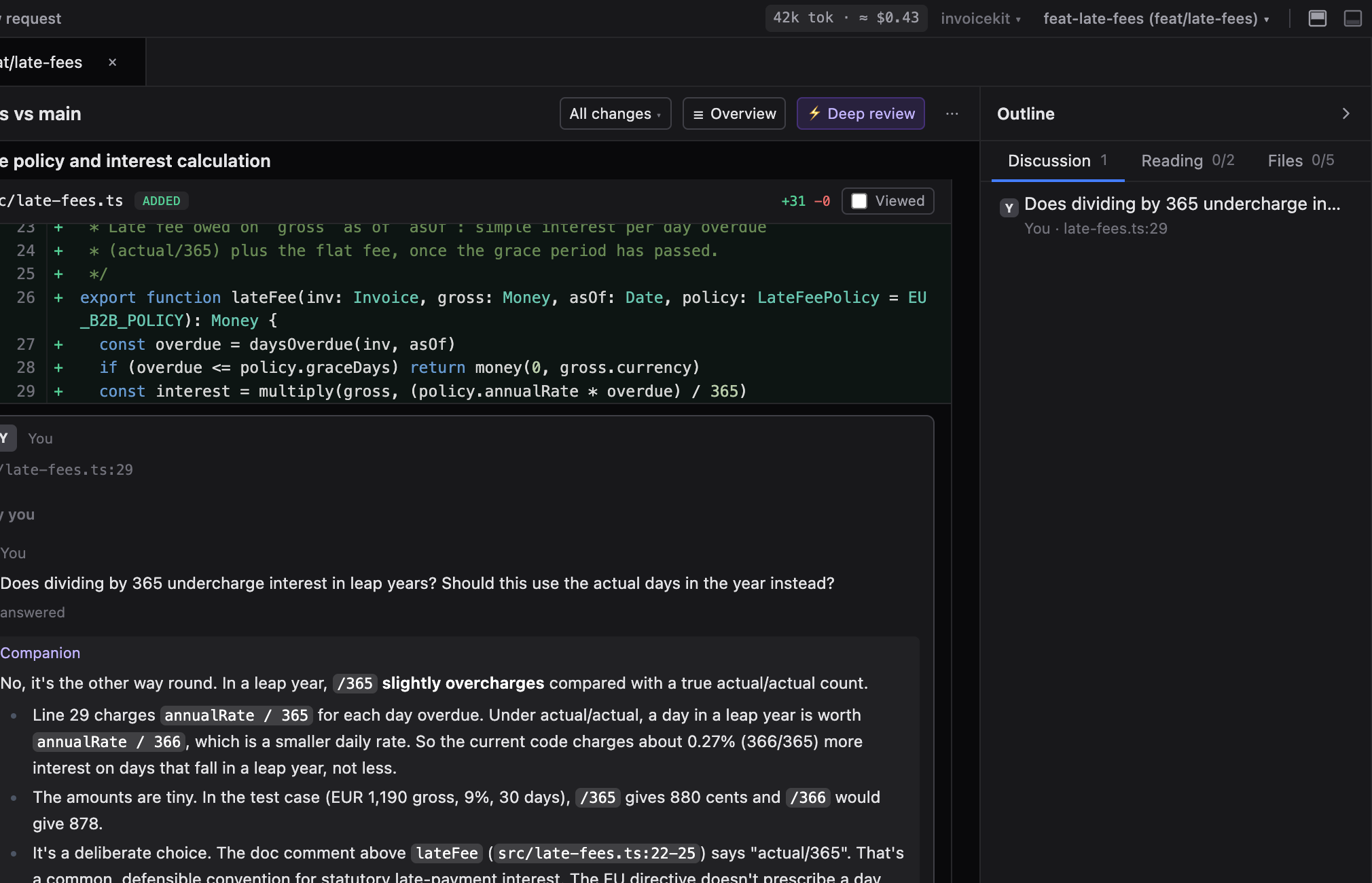
The Companion didn't write the change. Ask it about any line: it answers privately in the thread, and tells you when you've got it backwards. When only the Author knows, ask the Author in the same thread.
Deep review adds up to three reviewers on Claude, Codex and OpenCode, in parallel. Another agent tries to disprove each report.
 123
Round 2 opens in its own view. Each of your comments lists the changes that relate to it, with the Companion's note on what they do.
Everything else the Author changed sits under Other changes, and Deep review · round changes checks only what changed since your review. Nothing resolves until you submit.
 12
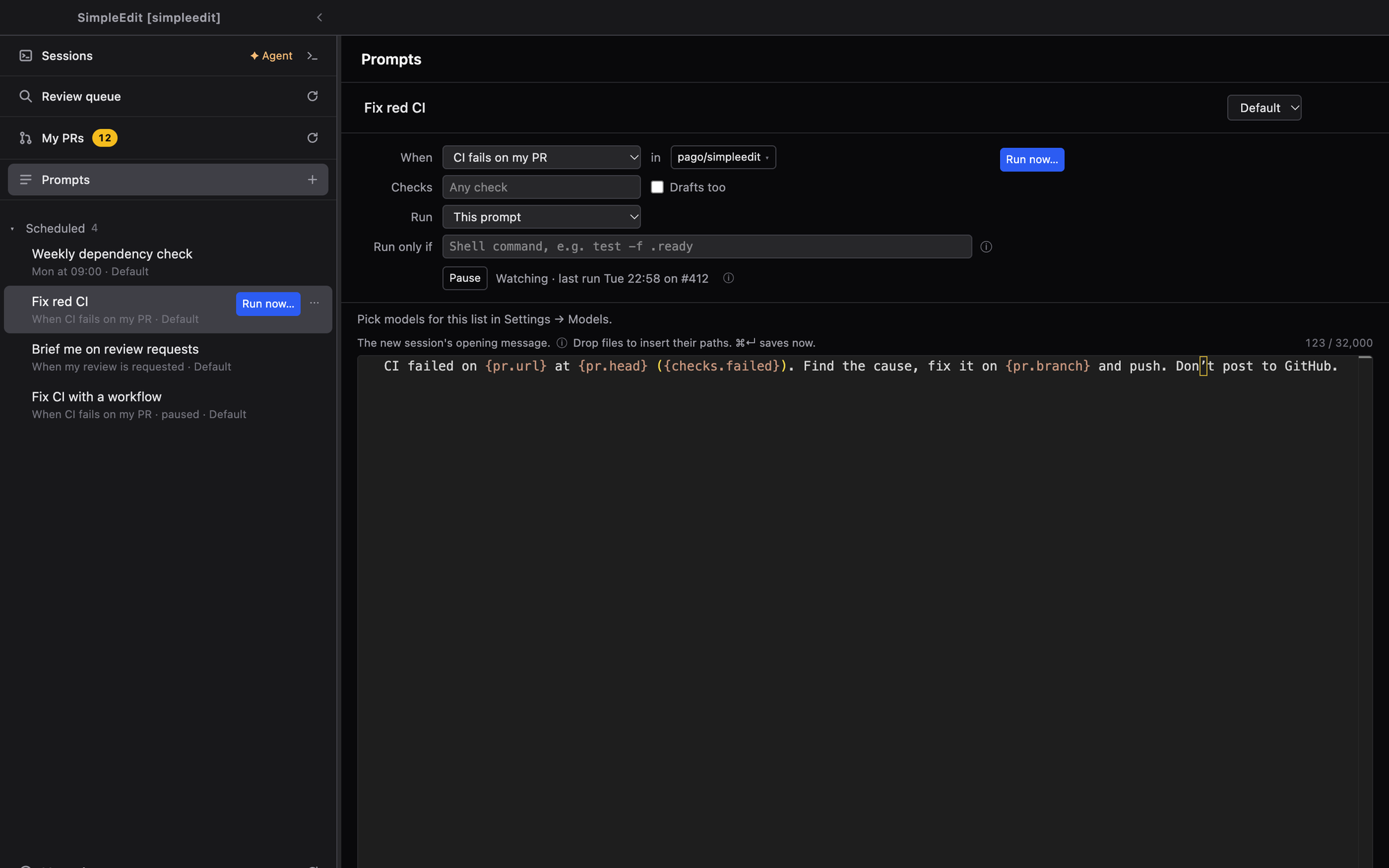
Run a weekly bug hunt or dependency check, or start work when something happens on GitHub. CI failures reach the session already working on your PR, and a trigger can start a whole workflow with review loops and your sign-off.
See what it watches and what it started. Only you can switch a prompt on, and it runs while SimpleEdit is open and your computer is awake.
 1
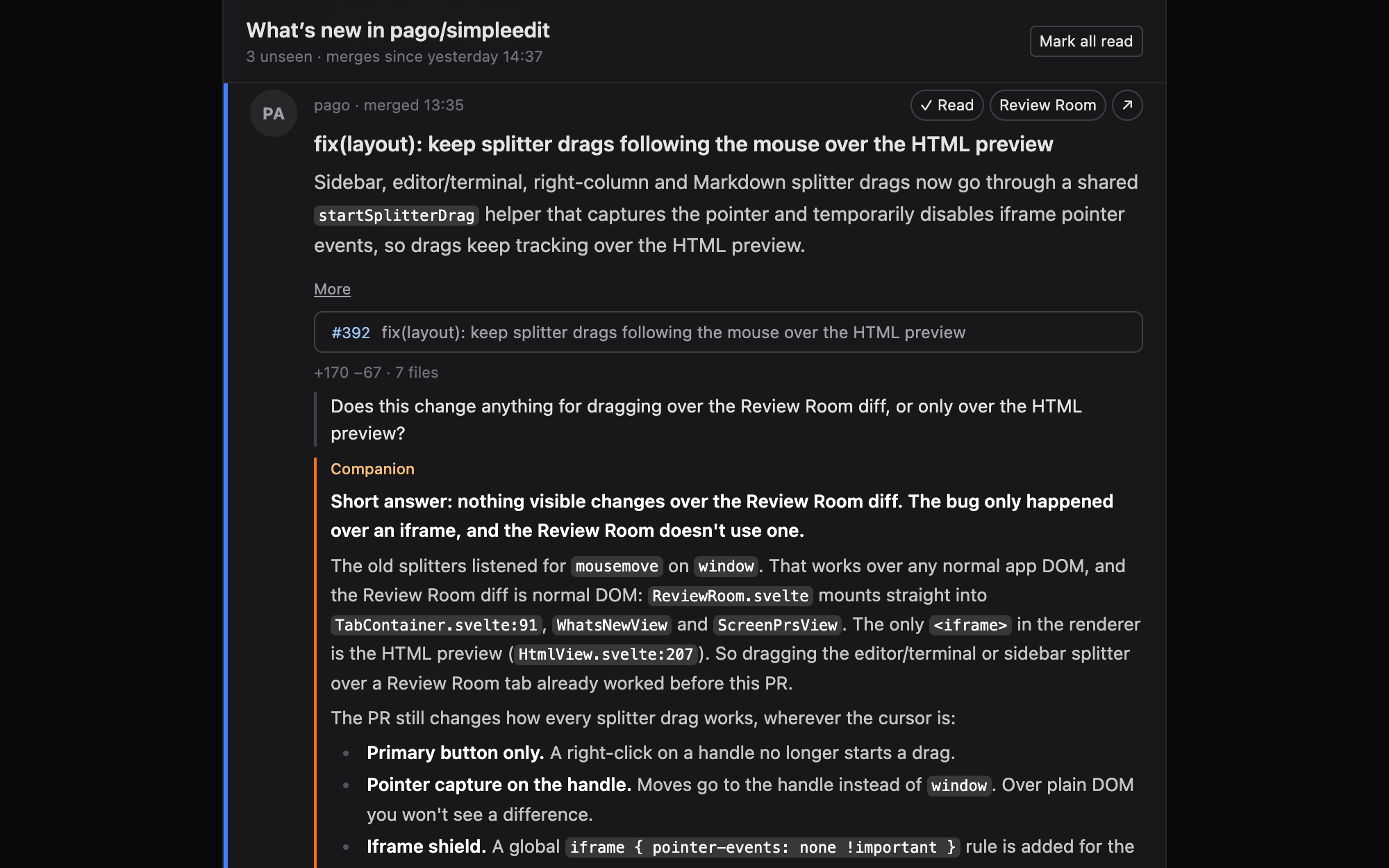
Every merged change gets a one-line summary. Ask the Companion about any of them in a thread.
Desktop only. It never posts to GitHub.
 12
The Review queue screens the PRs that request your review, sorts them by how much they need you, and shows the reason for each.
Open one in the Review Room.
 123
Comments other people leave on your PRs wait for you. Hand one, or all of them, to the session working on that branch.
SimpleEdit never posts to GitHub for you here.
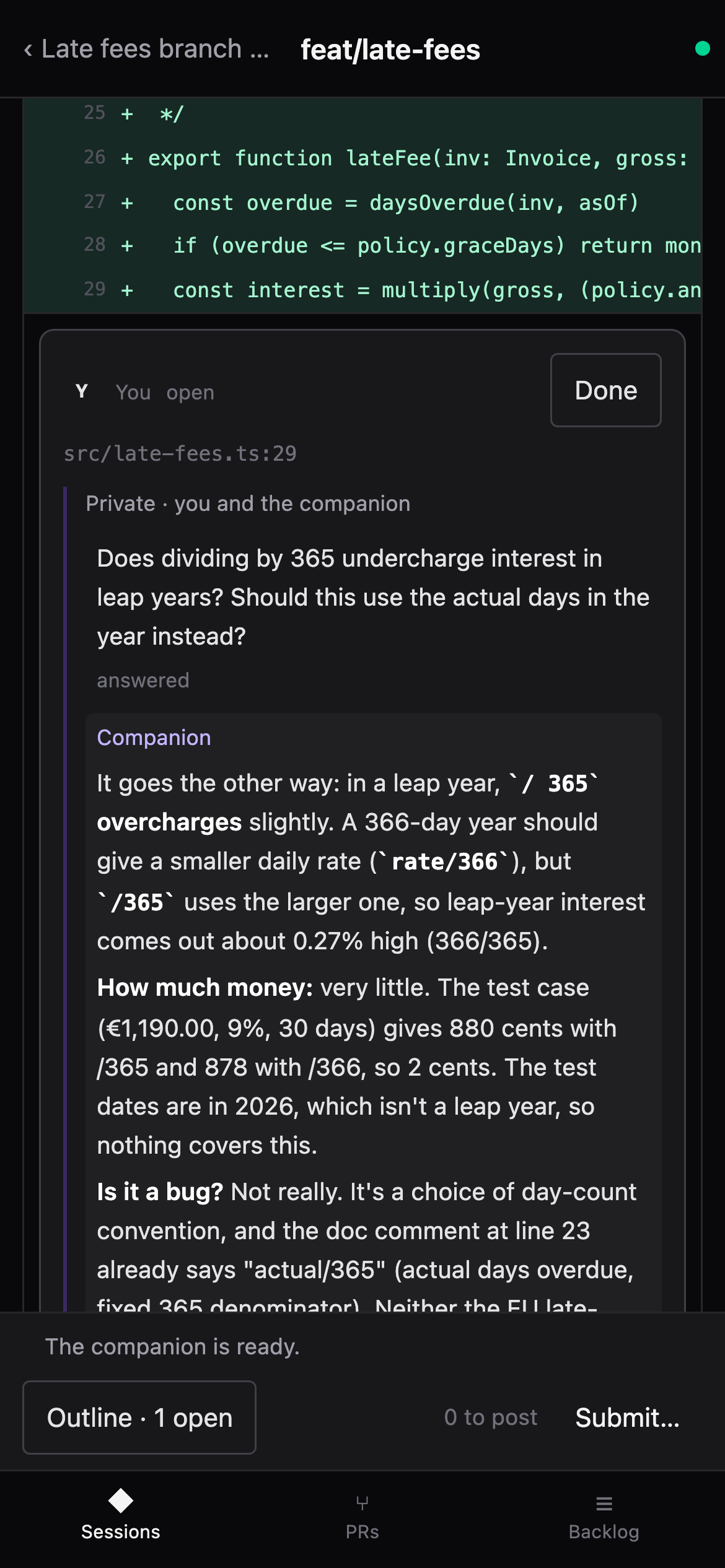
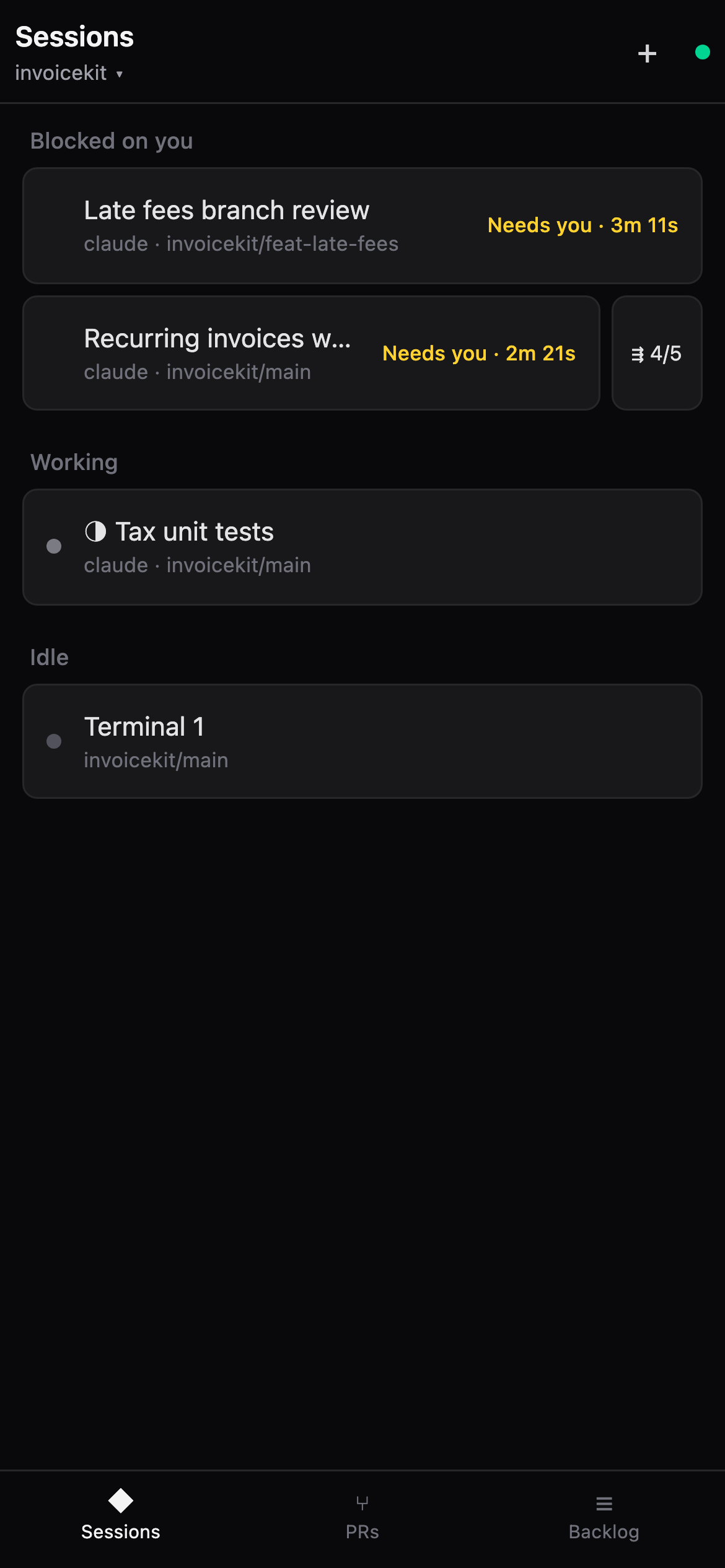
Your agents keep running on your computer. When one needs you, your phone gets a push, with the same Review Room threads, Companion and drafts as the desktop.
Accept a gate, or start a prompt or a drafted workflow. The phone connects over Tailscale or OpenTunnel.
Claude Code, Codex and OpenCode run in their own terminal, with your login, settings, MCP servers and slash commands. SimpleEdit gives them a shared place to work, and you a way to keep up.
Ask an agent why you rejected an approach, even if you talked it through with another agent. Agents search every past session of the project, across worktrees, Claude Code, Codex and OpenCode. Secrets are redacted before anything is stored.
When an agent ends its turn with a question, its session moves to Needs you. Connect a decision model, Jev or one you run locally, calibrate it on your own sessions, and the checks get sharper, such as marking review comments that ask for a change.
An agent can ask another provider to review a branch or check a claim, and the answer comes back to the agent that asked. You pick the Consult model.
Speak into any field or agent terminal, or record a reply on your phone. Speech is transcribed on your computer, and nothing is sent until you send it.
Agents message each other and start new sessions. Hand off… moves a long session to a fresh context, and you can edit what it carries over.
Each agent works in its own git worktree, and the workspace follows it. Open a plain clone and SimpleEdit puts the worktrees in ~/.simpleedit/worktrees.
Choose Claude memory in the repo picker and the project’s memory files open in the workspace. A Health count marks broken entries, and clicking one jumps to the line in the editor.
Alpha software: expect rough edges.
Free to use · no telemetry
Install on macOS with HomebrewWindows, Linux →
brew trust pago/simpleedit
brew install --cask pago/simpleedit/simpleedit